
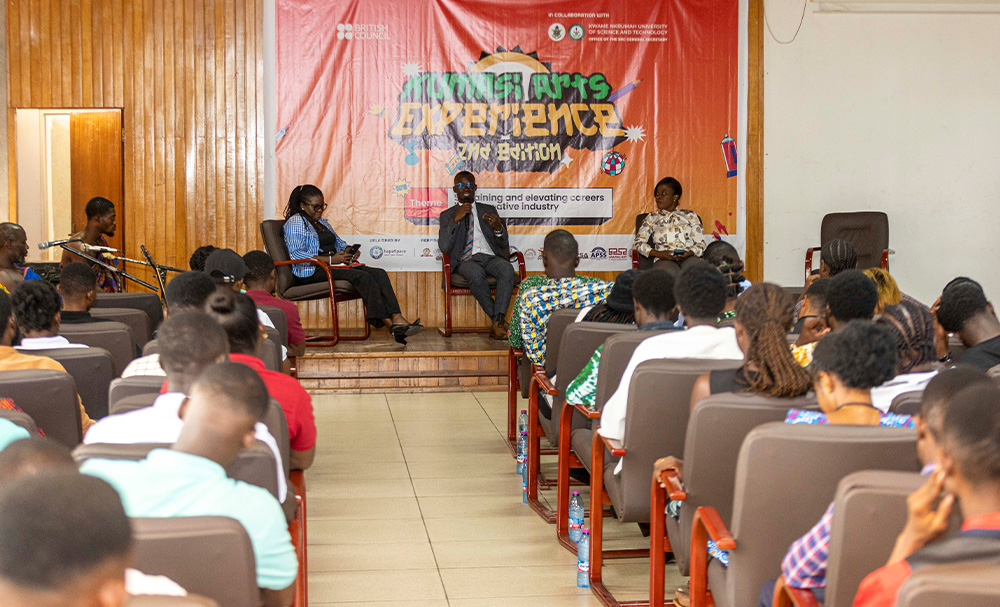
The Office of the SRC General Secretary at the Kwame Nkrumah University of Science and Technology, Kumasi (KNUST) in collaboration with the British Council, has organised the second edition of the Kumasi Arts Experience to support and elevate careers in the creative industry.
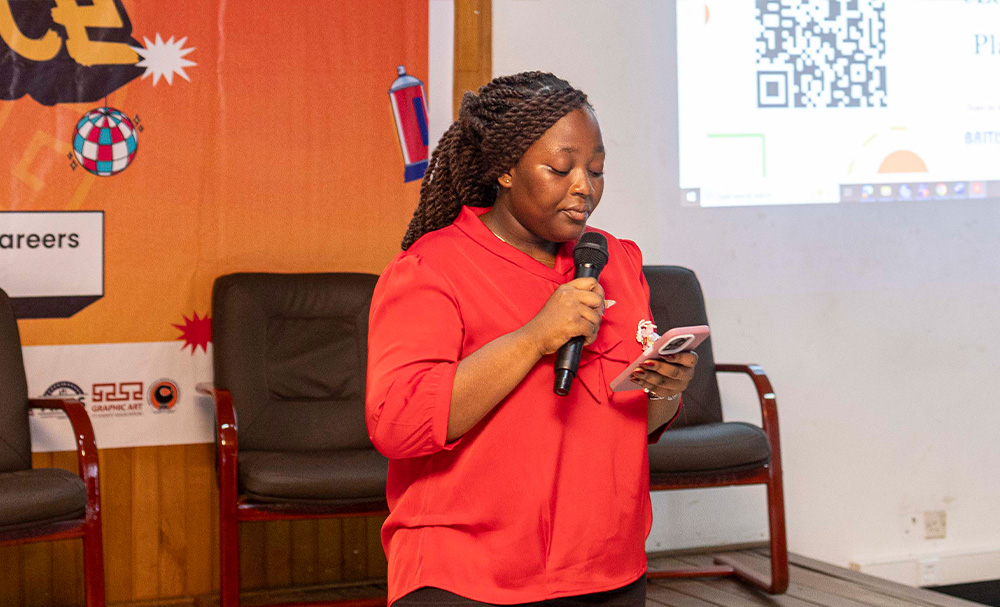
SRC General Secretary Woelinam Atsu Kunudzro said the gathering goes beyond a conventional event and reflects a broader vision. According to her, the initiative recognises the creative industry not only as a space for expression but also as a key driver of innovation, employment and national development.
Addressing the theme, “Sustaining and Elevating Careers in the Creative Industry,” she highlighted a major challenge facing young creatives.
“Young people in the creative space are often full of passion, ideas, and talent, but sustaining their careers remains difficult,” she said.
“Creatives can turn their passion into a profession, move from visibility to viability, and build careers that are impactful and long-lasting,” she added.
Kunudzro said the programme, through conversations, exhibitions and shared experiences, creates connections between talent and opportunity, creativity and structure, and dreams and reality.
“The Kumasi Arts Experience serves as a platform to respond to these concerns,” she said, emphasising that the creative economy should not be viewed as secondary but central to development.
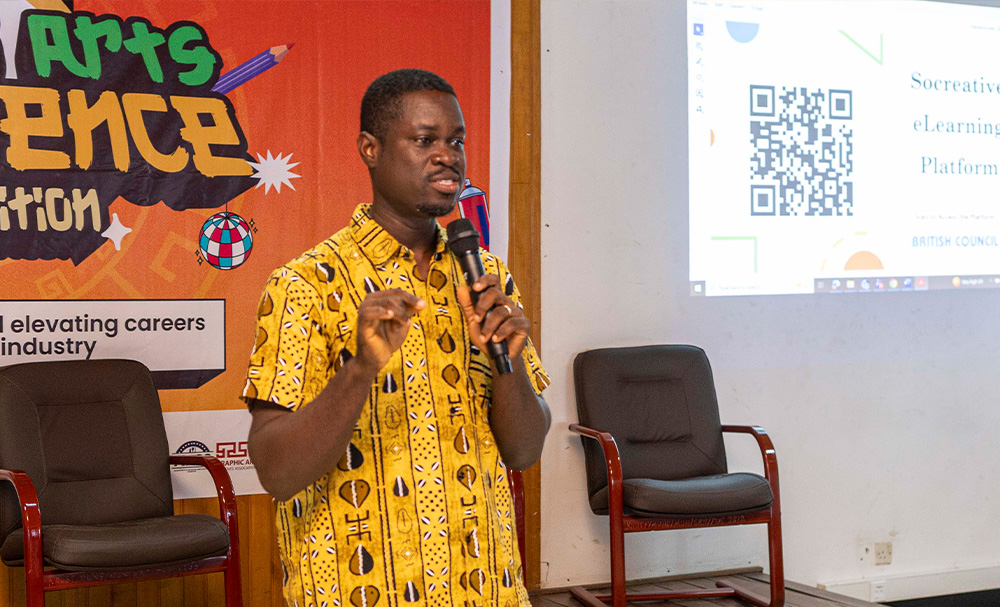
Project Manager for Arts and Culture at the British Council, Andrew Entsua-Mensah, said the organisation’s Creativity Learning Platform offers resources to help creatives build enterprise skills. “The aim is fostering careers in the creative industry,” he said.
He noted that the event brings together students, lecturers and industry professionals to explore how creative skills can contribute to the broader economy.
Entsua-Mensah added that participants included students from KNUST’s Faculty of Arts, Kumasi Technical University and Akenten Appiah-Menka University of Skills Training and Entrepreneurial Development (AAMUSTED).
“This is more of an engagement of the art community for students to promote social networks and learn from each other,” he said.
He said the broader goal is to support young creatives to contribute meaningfully to the economy and recognise the value of their work.
He added that the British Council has provided grants to creative hubs and institutions, including KNUST, to support student onboarding and engagement with enterprise platforms for learning creative entrepreneurship.
During a panel discussion, speakers shared insights on navigating careers in the creative industry.
Dr. Ralitsa Diana Debrah highlighted progress in the sector and the transformative impact of artificial intelligence on creative work.
She emphasised the importance of mentorship and continuous learning, urging students to engage proactively with the industry and learn from failure rather than give up. She also encouraged exploration of local fashion design ecosystems and the use of digital tools to enhance creative output.
Michael Osei Boakye underscored the importance of seizing opportunities in a globalised world and the role of social media, particularly TikTok, in showcasing creativity.
He encouraged young people to master their craft and acquire the necessary skills before pursuing success, noting that communication, writing and economic literacy are essential for business growth.
Phyllis Mensah said Ghana has made significant progress in the creative industry, citing increased appreciation and engagement on social media.
She urged young creatives to capitalise on these opportunities, stressing that discipline, consistency and differentiation are key to avoiding stagnation. She also highlighted the importance of entrepreneurial skills beyond talent and passion.
| Story: Ama Pokuaa Mensah | Photos: Isaac Kwaku Duah |


